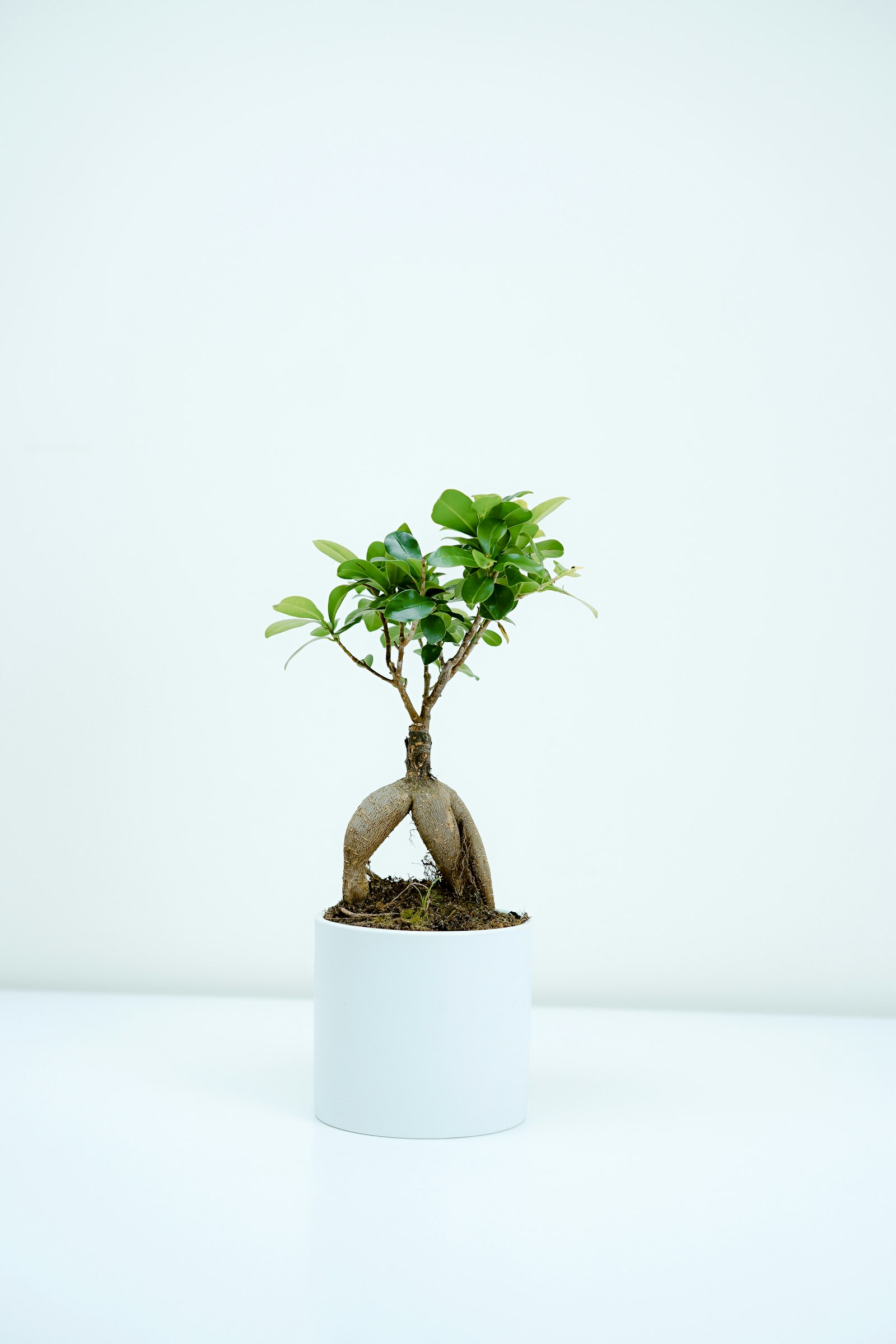
Bonsai tree
盆栽

The Art of Bonsai

1,300 years of living sculpture

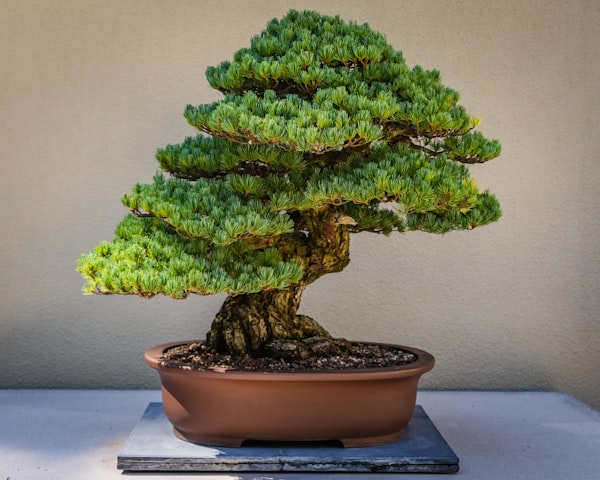
Bonsai is not about making trees small. It is about making small trees look ancient. The word itself — bon (tray) and sai (planting) — describes a tree planted in a shallow container, shaped by human hands to evoke the grandeur and weathered beauty of nature in miniature.

Originating in China over 1,300 years ago as penjing, the art was carried to Japan by Buddhist monks who sought to bring the outdoors into their temples. There, under the influence of Zen philosophy, it evolved into something altogether more refined: a meditation in living wood.
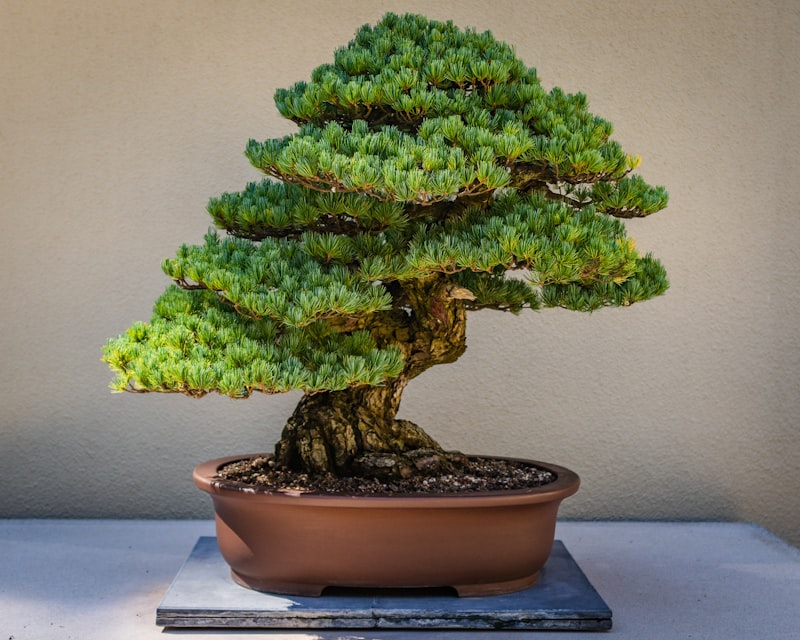
Bonsai close up
Photo: Unsplash
1,300+
Years of History
1,000+
Age of Oldest Bonsai
30+
Classical Styles
500+
Species Used

"A tree that is left growing in its natural state is a crude thing. It is only when it is kept close to human beings who fashion it with loving care that its shape and style acquire the ability to move one."
Utsubo Monogatari, circa 970 AD — the earliest Japanese literary reference to bonsai
Bonsai garden

A Living Timeline

From Chinese monastery gardens to global art form
~700 AD
Chinese monks develop penjing, the art of miniature tray landscapes with rocks and tiny trees.
1185
Bonsai arrives in Japan during the Kamakura period. Zen monks simplify the art, focusing on single trees.
~1300s
Bonsai becomes a highly respected art form. Trees move from monasteries to the homes of Japanese nobility.
1610
The "Sandai Shogun" pine — still alive today at 500+ years old — is documented as cared for by Shogun Tokugawa Iemitsu.
1781
Annual exhibitions of dwarf potted pines begin in Kyoto. Bonsai shifts from elite practice to popular art.
1829
Sōmoku Kin'yō-shū is published — the first book establishing classical bonsai aesthetic criteria.
1910
Wire shaping replaces the older string and rope techniques. Zinc galvanized steel wire is used first.
1923
After the Great Kanto Earthquake, 30 families of bonsai growers resettle and found the Omiya Bonsai Village near Tokyo.
1945
The Yamaki Pine — a white pine bonsai that survived the Hiroshima atomic bombing — is later gifted to the United States. It still thrives today.
1970s+
Bonsai spreads worldwide. Societies form across Europe, the Americas, and Australia. The art transcends cultural boundaries.
Ancient bonsai
Photo: Unsplash

Classical Styles

Each form mirrors a force of nature
Formal upright bonsai
Formal Upright
A perfectly straight trunk tapering evenly toward the apex. Represents a tree growing in ideal conditions with no adversity. Branches grow progressively shorter toward the top.
Informal upright bonsai
Informal Upright
The trunk curves gently in an S shape but the apex remains directly above the base. The most common style, reflecting how most trees actually grow in nature.
Cascade bonsai
Cascade
The trunk grows downward past the base of the pot, imitating a tree on a cliff battered by wind and snow. Planted in tall, narrow pots for visual balance.
Slanting bonsai
Windswept
All branches lean dramatically in one direction, shaped by relentless wind. The most dramatic and emotional of the classical styles.
Forest bonsai
Forest Planting
Multiple trees planted together in a single tray to represent a miniature forest. Trees of varying heights create depth and perspective.
Literati bonsai
Literati
A thin, elegant trunk with minimal foliage near the top. Inspired by Chinese scholarly painting. Emphasizes simplicity and sparse beauty.
Pine bonsai Maple bonsai

Philosophy

What bonsai teaches beyond horticulture
Zen garden with bonsai

The pot represents earth. The tree represents life. The air around it represents spirit. Together they form a unified expression of nature's essence in miniature.

In Zen Buddhism, bonsai is an object of contemplation — the imperfection of a curved trunk, the asymmetry of branches, the suggestion of age and endurance. The Japanese concept of wabi-sabi finds its purest expression here: beauty in imperfection, in impermanence, in incompleteness.

To prune a bonsai is to "edit nature" — balancing control with surrender, intention with acceptance. It is why many practitioners describe the art not as growing a tree, but as growing patience.

"A bonsai is not a destination. It is a conversation between the artist and the tree — one that can last a thousand years."

Traditional saying
Bonsai in light